All News
Blog
Christmas in Greece is not only a time of lights, carols, and family gatherings—it is also a season defined by irresistible aromas drifting from home kitchens and neighborhood bakeries. Olive oil, honey, butter, spices, and toasted nuts come together to create the country’s most beloved festive treats. Among them, three traditional sweets reign supreme: melomakarona, kourabiedes, and diples. Tasting them is like tasting Christmas itself, each bite carrying centuries of history, hospitality, and celebration.
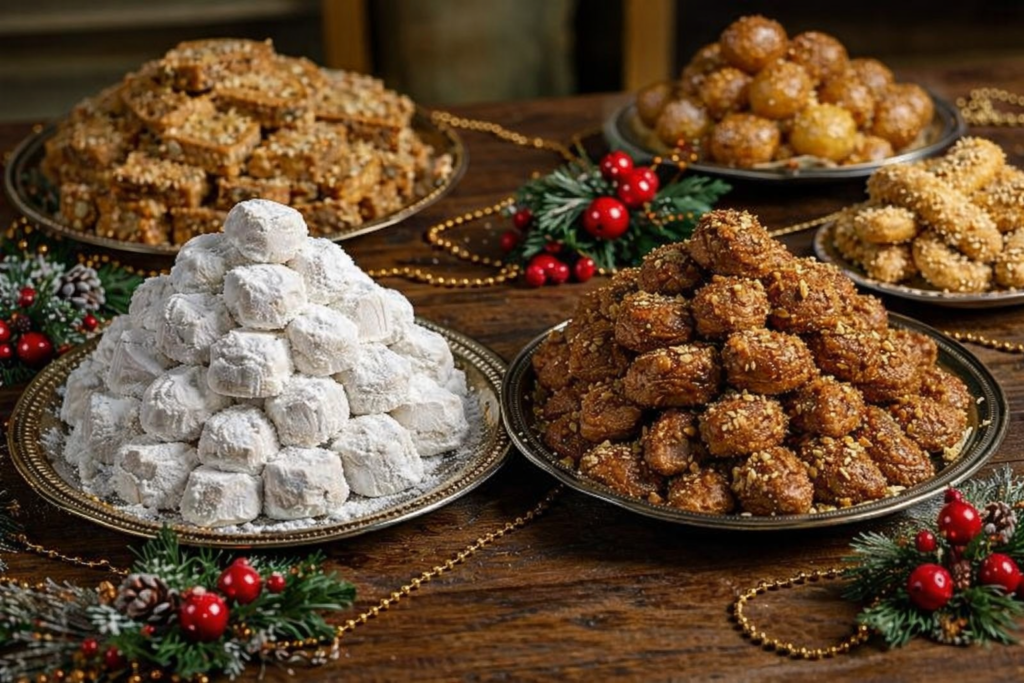
If there is one sweet that captures the soul of a Greek Christmas, it is melomakarona. These oval-shaped cookies are baked with olive oil, orange zest, cinnamon, and cloves, filling the house with a comforting, festive fragrance long before they are ready. Once out of the oven, they are soaked in warm honey syrup and generously sprinkled with crushed walnuts.
Melomakarona strike a perfect balance between crisp and tender, sweet yet aromatic. Their roots go back to ancient Greece, evolving over time into the honey-soaked delicacy we know today. Traditionally, they symbolize abundance and prosperity—making them an essential part of the Christmas table. In many Greek homes, recipes are family treasures, carefully guarded and passed down through generations, with friendly debates over whose version is “the best.”
In striking contrast to melomakarona’s golden glaze, kourabiedes arrive like small snow-covered hills. These buttery shortbread-style cookies are made with generous amounts of butter, almonds, and sometimes a hint of rosewater or vanilla. Once baked, they are buried under a thick layer of powdered sugar, giving them their signature snowy appearance.
Kourabiedes are rich, crumbly, and melt in your mouth—a true indulgence reserved for special occasions. In many Greek households, the first batch signals that Christmas has officially begun. Traditionally associated with celebration and joy, they are often served to guests alongside Greek coffee or festive liqueurs. One bite is enough to understand why they are inseparable from Christmas gatherings and family visits.
While melomakarona and kourabiedes are found across Greece, diples are especially beloved in regions such as Crete and the Peloponnese. Their name comes from the Greek word for “fold,” as these thin sheets of dough are folded or rolled while frying in hot oil. Once crisp and golden, they are drizzled with honey and sprinkled with cinnamon and crushed walnuts.
Diples are light, crunchy, and delicately sweet, offering a different texture from the softer Christmas cookies. Traditionally prepared for weddings and major celebrations, they also hold a place on the Christmas table, symbolizing happiness and good fortune. Watching diples being made is an art in itself, often turning into a festive family ritual in the kitchen.
These three sweets are more than desserts—they are expressions of Greek hospitality, tradition, and love for sharing. During Christmas, plates of melomakarona, kourabiedes, and diples are offered generously to guests, neighbors, and travelers alike. To taste them in Greece during the festive season is to experience Christmas as locals do: slowly, warmly, and sweetly.
Whether enjoyed in a village home, a city bakery, or during a winter journey through Greece, these traditional sweets invite you to savor the season—and perhaps take a little bit of Greek Christmas magic with you wherever you go.
We’d like to occasionally send you news, offers and updates. To join our mailing list enter your email address in this box and look out for a confirmation in your inbox.