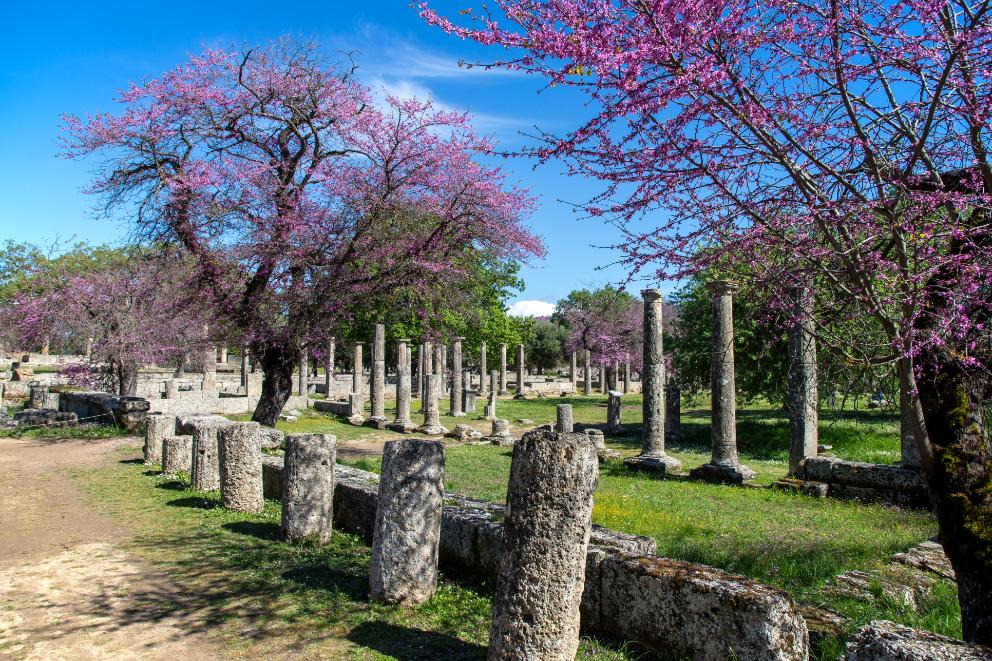
Ancient Olympia, located in the western Peloponnese, is one of Greece’s most important archaeological sites and the birthplace of the Olympic Games. Nestled in the Alfeios River valley, surrounded by olive groves and gentle hills, Olympia combines historical significance with a serene natural setting. Its well-preserved ruins, coupled with its cultural legacy, make it a must-visit destination for history enthusiasts and travelers interested in ancient Greek civilization.
Situated in the region of Elis, Olympia lies in a fertile valley near the Alfeios River. The surrounding plains and low hills provide a peaceful and scenic backdrop, allowing visitors to explore the archaeological site at a leisurely pace. The area’s Mediterranean climate, with hot summers and mild winters, ensures a pleasant visit throughout most of the year.
Olympia’s history dates back to the 8th century BC, when it became the sacred site of the Olympic Games held every four years in honor of Zeus. The sanctuary was a religious, cultural, and athletic center, attracting competitors and spectators from across the Greek world. Temples, treasuries, and sports facilities were constructed over centuries, reflecting the importance of Olympia in classical antiquity. Today, it is recognized as a UNESCO World Heritage Site and continues to symbolize the values of sportsmanship and human achievement.
Visitors to Ancient Olympia can explore a wealth of historical treasures:
Exploring Olympia allows visitors to combine history with leisure. Walking among the ruins, climbing to elevated viewpoints, or visiting the museum provides a complete understanding of the ancient site. Nearby villages offer traditional tavernas, olive groves, and local crafts, while day trips to the beaches of the western Peloponnese or the scenic Alfeios River valley complement the cultural experience.
Olympia enjoys a Mediterranean climate with warm summers and mild winters. The best time to visit is spring and autumn, when the weather is comfortable, the landscape is green, and crowds are smaller. Summer offers sunny days, but temperatures can be high, making early morning or late afternoon visits preferable.
Ancient Olympia is more than an archaeological site—it is a symbol of ancient Greek culture, athleticism, and spirituality. Its temples, stadium, and museum tell stories of human achievement, competition, and devotion to the gods. Whether exploring the ruins or strolling through the olive groves, visitors are transported back to a time when Olympia stood as the heart of the Greek world.
We’d like to occasionally send you news, offers and updates. To join our mailing list enter your email address in this box and look out for a confirmation in your inbox.